
Best Volkswagen engines: reliable and durable
The reliability of Volkswagen engines is recognized worldwide. With your VW experts in Laval on the North Shore of Montreal, near Terrebonne and...
Read more

Charging time and cost for an electric car can vary based on several factors.
The main factors to consider when estimating charging time and cost are:
How much does it cost to charge an electric car? The answer is not as simple as it looks, since many factors can affect both the price and the time required for charging.
Charging an electric vehicle in Quebec is both economical and convenient. With a residential level 2 charging station, a full charge typically takes between 6 and 10 hours, which is ideal overnight. On a DC fast charging station, you can reach 80% state of charge in only 20 to 60 minutes, which works well for long road trips. As for the budget, the average annual cost of electricity for an EV ranges from $400 to $600, which is far less than gasoline, as for gas can cost three to four times more over similar distances. Finally, installing a home charging station is an investment of $800 to $1,500, often reduced by provincial incentives.
Here is what you need to know next.
Different factors can have a significant influence on the charging time for an electric vehicle, no matter the make or model.
Here are certain factors that can influence how long your car will need to be plugged into a charging station.
The factor that has the most significant impact on charging times is the charging station itself, and how powerful it is. In fact, for a fully electric vehicle, you will need between 19 and 48 hours if you are charging on a regular 120V outlet; this option is rarely used by EV owners, but much appreciated by those who have a plug-in hybrid, given that charging times are much lower (closer to 12 hours) with this type of vehicle.
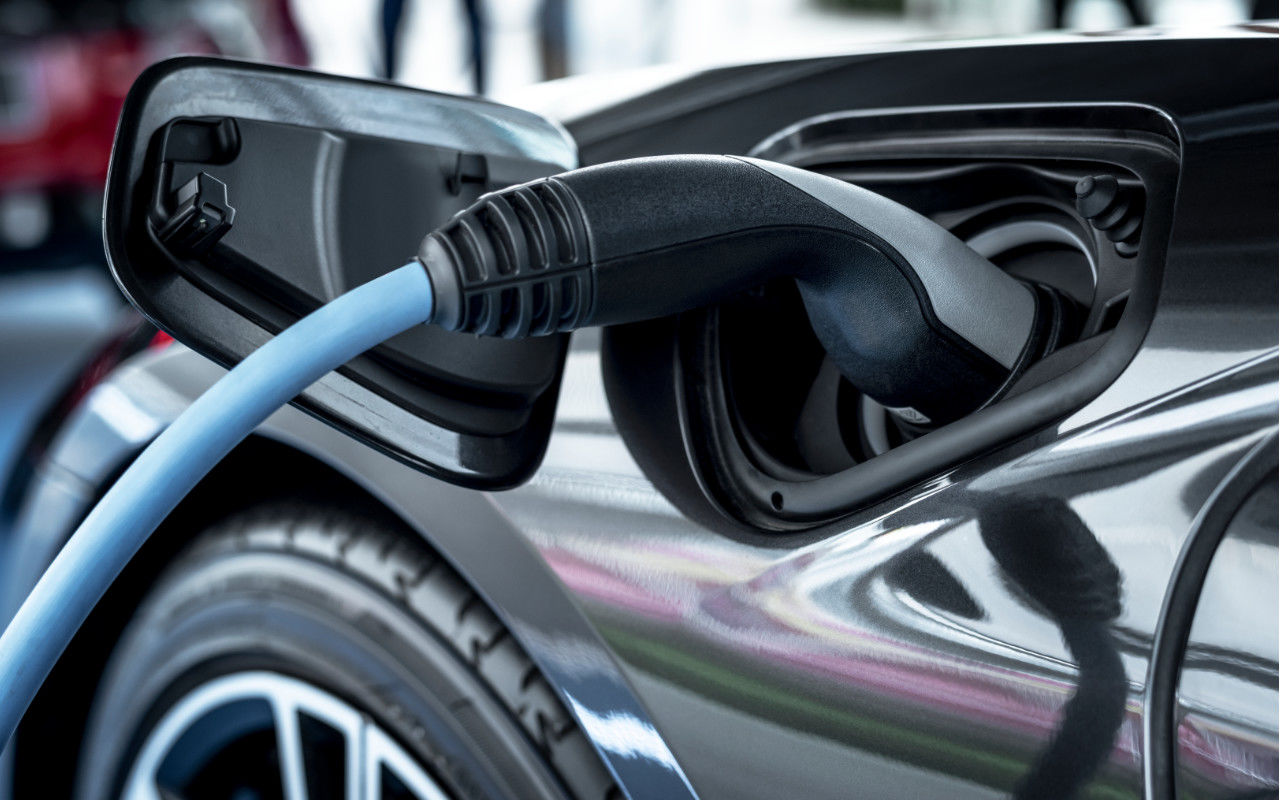
The most popular method –and the most accessible to you during your commute- remains the level 2, 240V, charging stations. In fact, these charging stations can be installed directly at your home by a licensed electrician. You could also plug your vehicle into one of these public charging stations (there are over 3,000 for the Electric Circuit alone, without taking into account other suppliers).
In this case, for a fully electric model, full charge will be reached between 4 and 9 hours and this number drops to around 2.5 hours for a plug-in hybrid vehicle.
By opting for a level 3 charging station (also called fast or ultra-fast charging stations, depending on the power they offer), you will only need from 45 to 75 minutes in average to recover an 80 % charge on your vehicle. Take note that several plug-in hybrid models and some 100 % electric models are not compatible with these charging stations.
It is also possible for you to regain a range of around forty kilometers in 10 to 30 minutes on a fast charging station, depending on the power it offers.
| Type of charging station | Charging Time |
|---|---|
| 120 V | 19 to 48 hours (100% electric vehicles) Around 12hrs (plug-in hybrid vehicles) |
| 240 V (Level 2 charging station) | 4 to 9 hours (100% electric vehicles) Around 2.5 hrs (plug-in hybrid vehicles) |
| 24-100 kW (Level 3 charging station: Fast or Ultra-Fast) | 80% in 45 - 75 minutes (100% electric vehicles) |
An electric vehicle’s battery size also has an impact on the time you will need to charge it. The more voluminous a battery, the longer it will take for it to charge fully.
For example, the battery on the future Volkswagen iD.Buzz, will have an 82 kWh capacity. Some electric models have a smaller battery.
The same way weather conditions can have an impact on the electric range offered by your vehicle, it can also influence the charging times, making them longer. It will be important for you to take this into account when planning longer trips and charging times, especially when mercury levels drop!
Here too, everything will depend on the type of charging station you use. The higher the power offered by the charging station, the more expensive charging will be… although it will always remain more affordable than filling up at the pump!
For example, if you are charging at home on a level 2 charging station, you will take advantage of electricity costs at the current rate. Let’s take, for example, an electric vehicle used 80 % of the time on highway, and 20 % in an urban setting.
The calculation tool on the Hydro-Quebec website shows that for a 0.112 09$/kWh rate, your vehicle would cost you only $ 430 annually for 20,000 kilometers, which translates into $ 2.15 for 100 kilometers.
If we compare this to a fuel vehicle with a 10.0 L/100 km average consumption number, you would spend over $ 3,000 annually on fuel for the same use and driving distances, if the price of fuel per liter is $ 1.55.
Charging costs vary a lot, depending on the power offered by the charging station itself. Here is a sample of costs, according to the data found on the Electric Circuit website.
These prices are only given to you for informational purposes only, given that depending on the charging station supplier, these rates can vary.
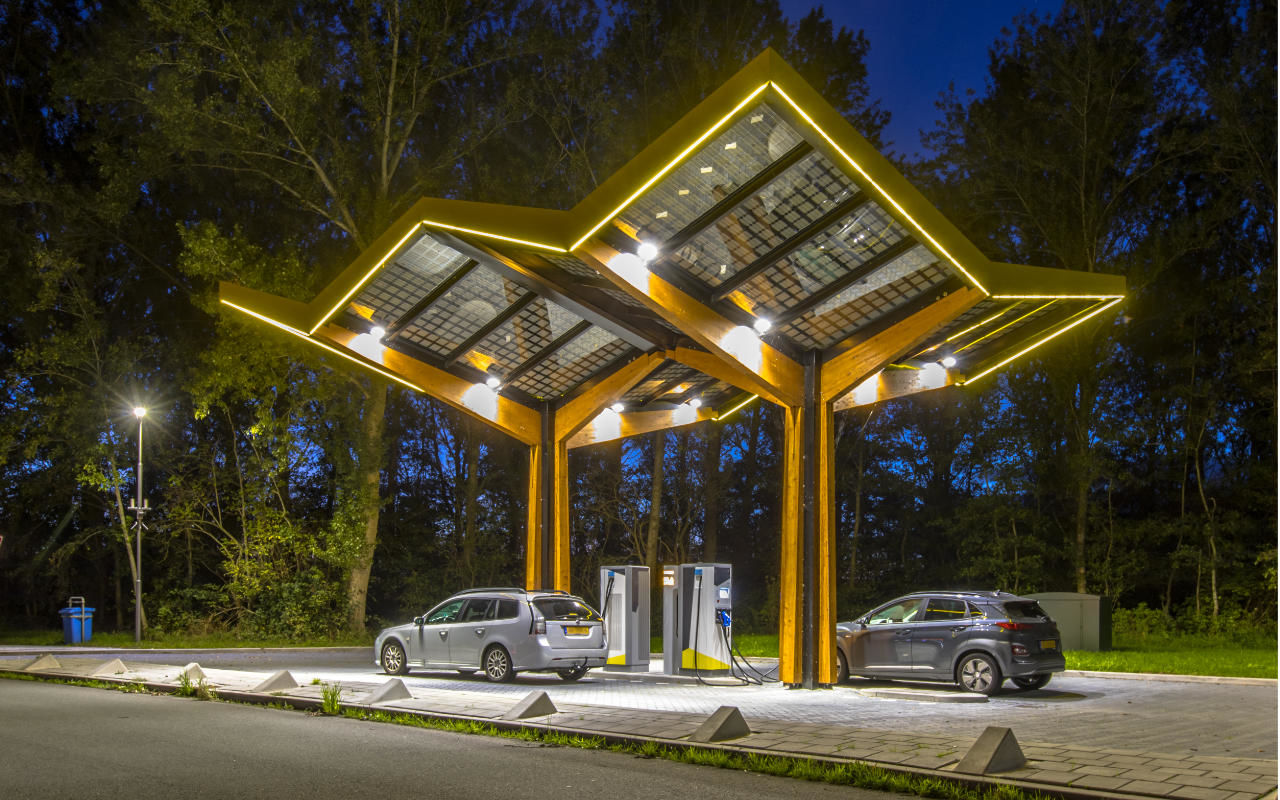
At home, you will most often use a level 2 charging station that adds roughly 40 to 60 km of range per hour. This type of station is ideal for a full charge during your normal downtime.
Your home charging cost will, therefore, depend on your vehicle's energy consumption. As with gasoline vehicles, some electric vehicles consume more energy than others.
Over the long term, charging a less energy‑efficient electric vehicle will cost more.
In 2026, electricity costs about $0.13 per kWh. Most vehicles use between 15 and 30 kWh per 100 km. As a result, home charging costs about $1.95 to $3.90 per 100 km of range replenished.
Public station costs vary mainly with their power rating. Here is a summary of pricing for the types of public stations you will find in Quebec in 2026:
Some stations exceed 100 kW. Rates rise accordingly based on their output.
For a concrete example, consider the 2025 Volkswagen ID.4, a fairly energy‑efficient EV that uses about 18.5 kWh/100 km.
Using Hydro‑Québec's calculator, the 2026 cost of home charging to drive 100 km would be only $2.43 for a vehicle requiring 19 kWh per 100 km.
Now compare that to DC fast charging at a 50-kW public station priced at $0.38 per kWh. It would cost $7.22 to travel 100 km with a 2025 Volkswagen ID.4 when you recharge at a 50-kW fast station.
Yes. In terms of energy consumption, there is no doubt that most electric vehicles cost less than gasoline vehicles.
For example, even a particularly efficient gasoline vehicle that uses only 5.0 L/100 km would require about $7.50 to travel 100 km if gasoline costs $1.50 per litre.
Generally, gasoline vehicles consume more than 5.0 L/100 km and the price of gas is often higher than $1.50 per litre.
The price per 100 km for an electric vehicle varies based on its energy efficiency and the types of charging stations used.
For example, with a fairly efficient model like the Volkswagen ID.4 charged on a level 2 home charging station, the price for 100 km is only $2.43.
To calculate the cost of home charging, you need your electricity rate per kWh and your electric vehicle's efficiency in kWh per 100 km.
To avoid doing the math yourself, you can use the online tool created by Hydro‑Québec.
Enter your vehicle's consumption in kWh per 100 km and the calculator will do the rest based on the electricity rate indicated on the site.
Here are the charging times and costs according to the different types of charging stations, at a glance.
| Charging Station Type | Speed | Charging Times | Charging Costs (data from the Electric Circuit) |
|---|---|---|---|
| 120V (very slow) | Very slow | 19 to 48 hours | |
| 240V (level 2): Recommended for domestic use | Normal | 4 to 9 hours | $ 0 to $ 3 / hr or $ 0 to $ 10 / charge |
| 24 kW | Fast | 45 to 75 minutes | $ 7.53/hr |
| 50 kW | Fast | Between $ 12.77/hr and $ 25.52/hr | |
| 100 kW | Ultra Fast | Between $ 15.73/hr and $ 31.45/hr |
Would you like to find out more about current and future electric vehicles offered by Volkswagen Canada, about our Volkswagen financing options, or our current special offers in Laval? Come and visit us today at Complexe VW 440, your Volkswagen dealership in Laval, close to Terrebonne, the North Shore of Montreal and Montreal North!
The price per 100 km for an electric vehicle varies based on its energy efficiency and the types of charging stations used.
For example, with a fairly efficient model like the Volkswagen ID.4 charged on a level 2 home charging station, the price for 100 km is only $2.43.
To calculate the cost of home charging, you need your electricity rate per kWh and your electric vehicle's efficiency in kWh per 100 km.
To avoid doing the math yourself, you can use the online tool created by Hydro‑Québec.
Enter your vehicle's consumption in kWh per 100 km and the calculator will do the rest based on the electricity rate indicated on the site.
Best Volkswagen engines: reliable and durable
The reliability of Volkswagen engines is recognized worldwide. With your VW experts in Laval on the North Shore of Montreal, near Terrebonne and...
Read more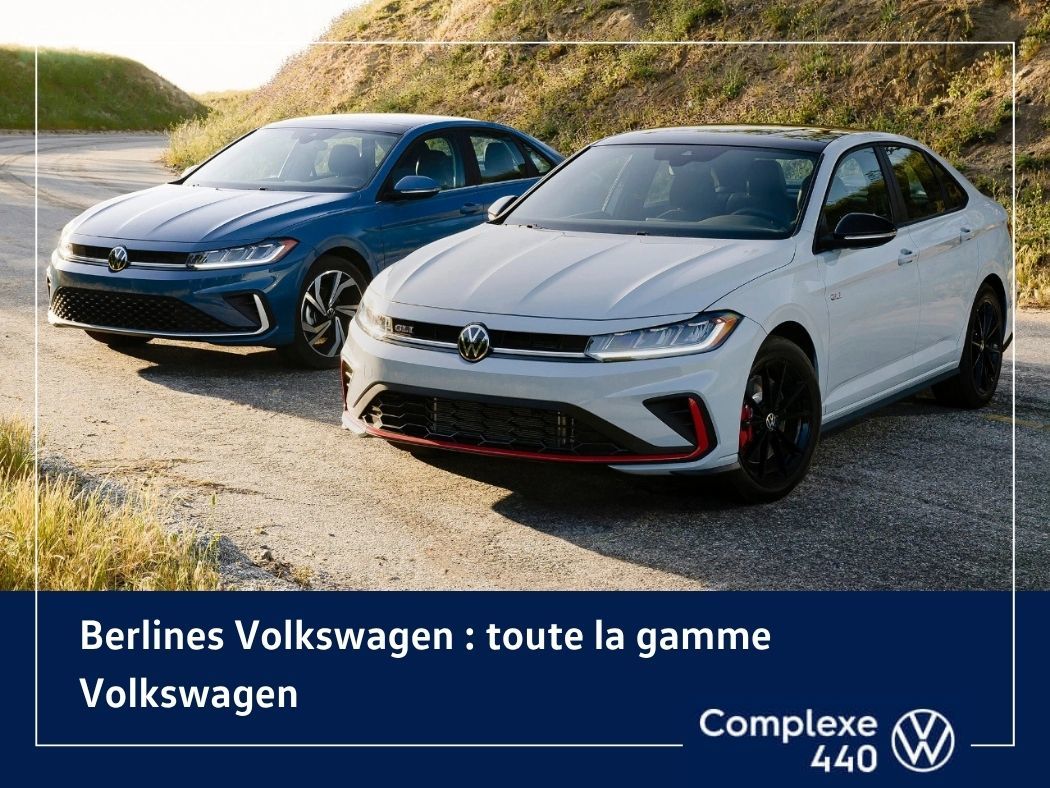
Volkswagen sedans: the full Volkswagen lineup
If you are looking for a Volkswagen sedan in Laval, count on the expertise of Complexe VW 440 on the North Shore of Montreal, near Terrebonne and...
Read more
AWD or front-wheel drive: which to choose in Quebec?
Hesitating between all-wheel drive versus front-wheel drive? Complexe VW 440 in Laval on the North Shore of Montreal, near Terrebonne and...
Read morePowered and developed by
